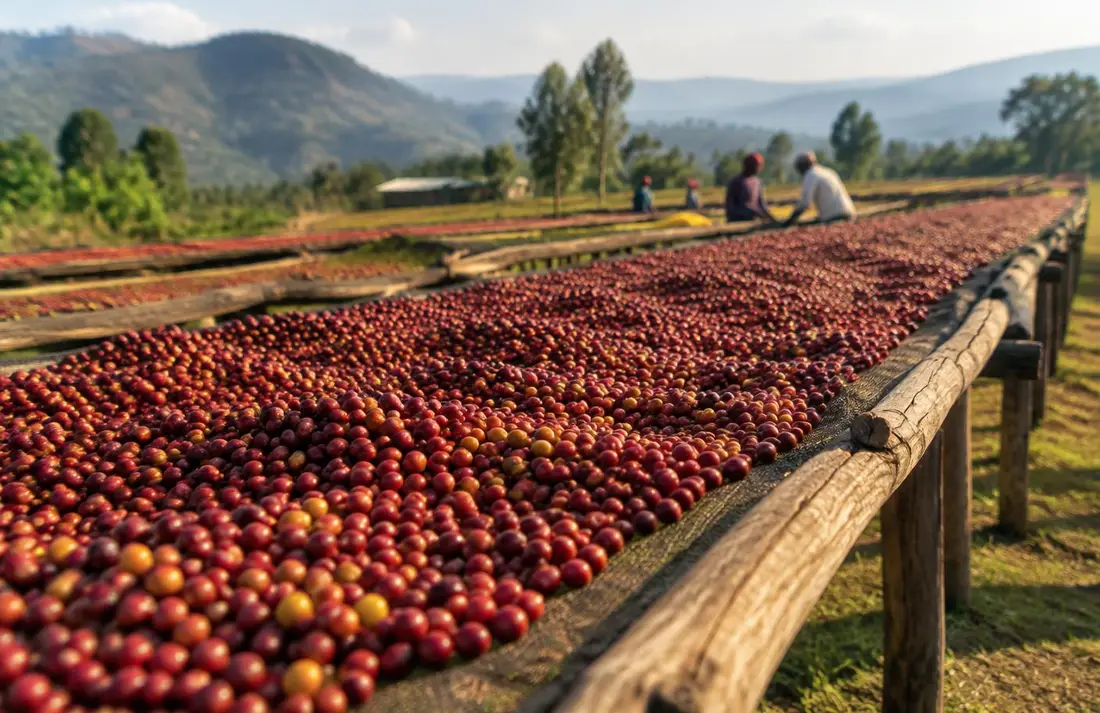
Customers ask us this more than anything else: "Why does the Bensa Natural taste like blueberries when the Yirgacheffe tastes like tea?" They are both Ethiopian, both grown above 1,900 meters, both picked by hand. The biggest difference happens after the harvest — in how the fruit is removed from the seed.
First, coffee is a fruit
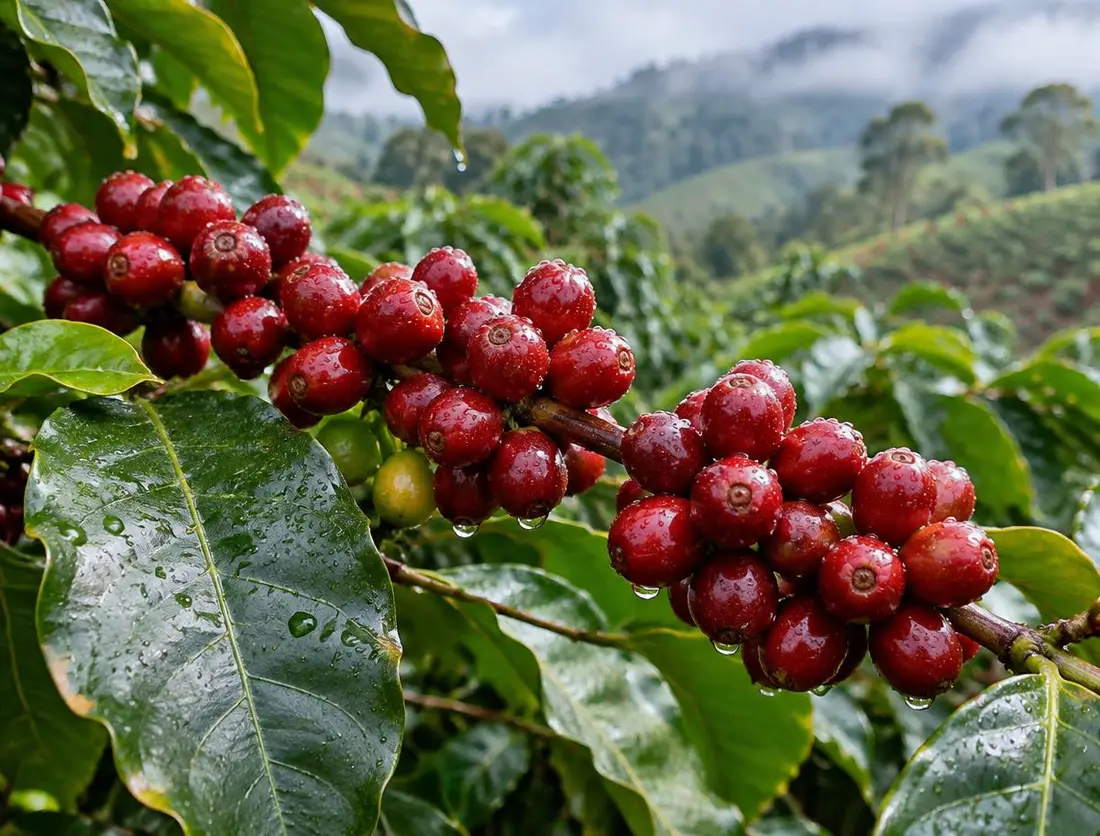
A coffee bean is the seed of a small red cherry. Around it are layers of skin, sweet sticky pulp (called mucilage) and a thin parchment shell. All of that has to go before the coffee can be roasted. The two classic ways to do it are washed and natural, with honey and anaerobic as newer variations.
Washed coffee: clarity first
At a washing station, cherries are sorted in water, the skin and pulp are removed by a machine called a pulper, and the beans sit in fermentation tanks for 24–72 hours to loosen the remaining mucilage. They are then washed in channels of clean water and dried on raised beds for about two weeks.
The result is a coffee that tastes mostly of the bean itself and the place it grew. In Yirgacheffe that means jasmine, bergamot, lemon and black tea. Washed coffees tend to have brighter acidity, a lighter body and a very clean finish.
Washed coffee shows you the terroir. Natural coffee shows you the fruit.
Natural coffee: fruit forward
Natural (or dry) processing is the oldest method and still very common in Ethiopia. Whole cherries are spread on raised beds in the sun and turned by hand several times a day for three to four weeks, until they shrivel into something like a raisin. Only then is the dried fruit hulled off.
During that time, sugars and aromatic compounds from the fruit migrate into the seed. That is where the blueberry, strawberry and wine-like notes come from. Naturals usually have more body and sweetness — and more risk: a few over-fermented cherries can make a whole lot taste muddy. That is why sorting matters so much.
Honey and anaerobic
Honey processing removes the skin but leaves some or all of the sticky mucilage on during drying. It sits between washed and natural: sweeter and rounder than washed, cleaner than natural. Our Guji Hambela Honey is a good example.
Anaerobic coffees are fermented in sealed tanks without oxygen before drying. The controlled fermentation produces intense flavors — rum, tropical fruit, cinnamon. Our Sidama Anaerobic Reserve spends 96 hours in the tank.
Which should you choose?
| If you like… | Try |
|---|---|
| Tea, citrus, florals, a light body | Washed — Yirgacheffe Washed |
| Berries, jam, chocolate, a syrupy body | Natural — Bensa Sidama Natural |
| Stone fruit, honey, something gentle | Honey — Guji Hambela Honey |
| Bold, adventurous, dessert-like | Anaerobic — Anaerobic Reserve |
The best way to understand processing is to taste a washed and a natural side by side. Brew them the same way, let them cool a little and compare. You'll never look at a coffee label the same way again.